Command & AI · Discover & chains · Build & trade · Model & visualize · Portfolio & risk
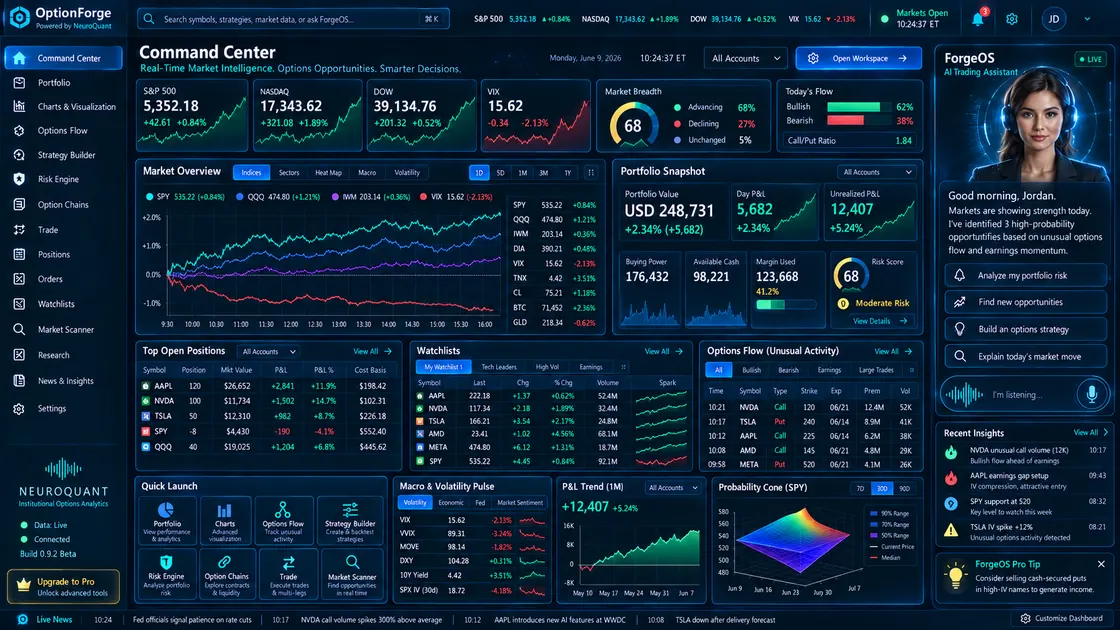
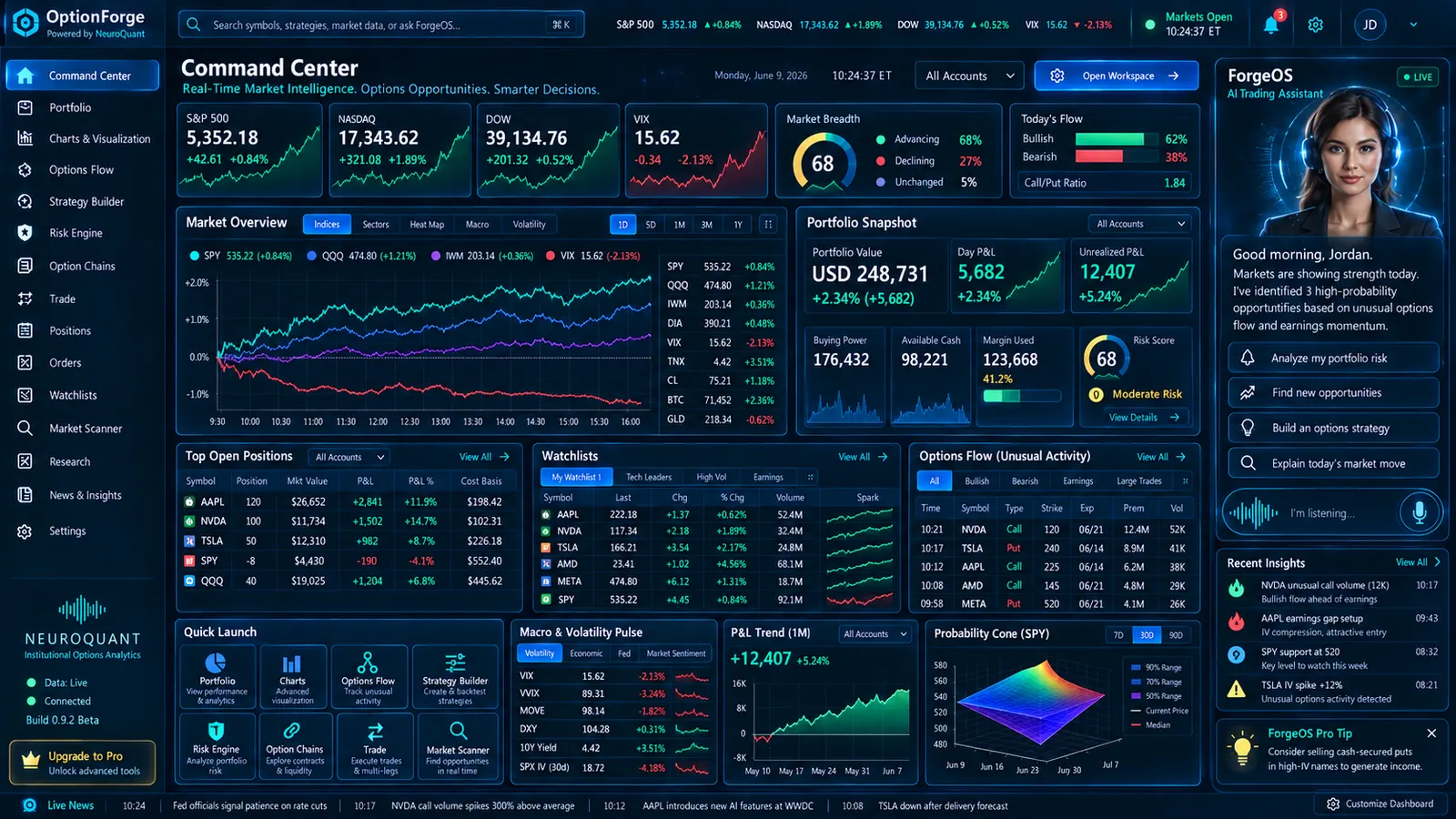
01 · Command Center
Future interface concept · Unified market intelligence
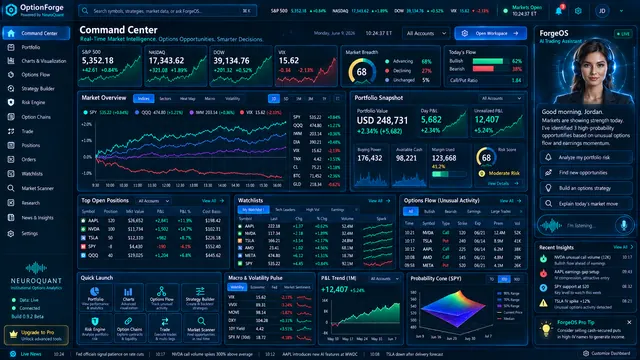
Explores a dense desktop overview that keeps market context, watchlists, risk signals, portfolio activity, and the ForgeOS assistant in one operational field.
Look for: Follow the relationship between the market overview, watchlist, portfolio panels, and assistant area.
Design question: Can a user identify the next analytical task without losing the wider portfolio context?
Current Command Center guide
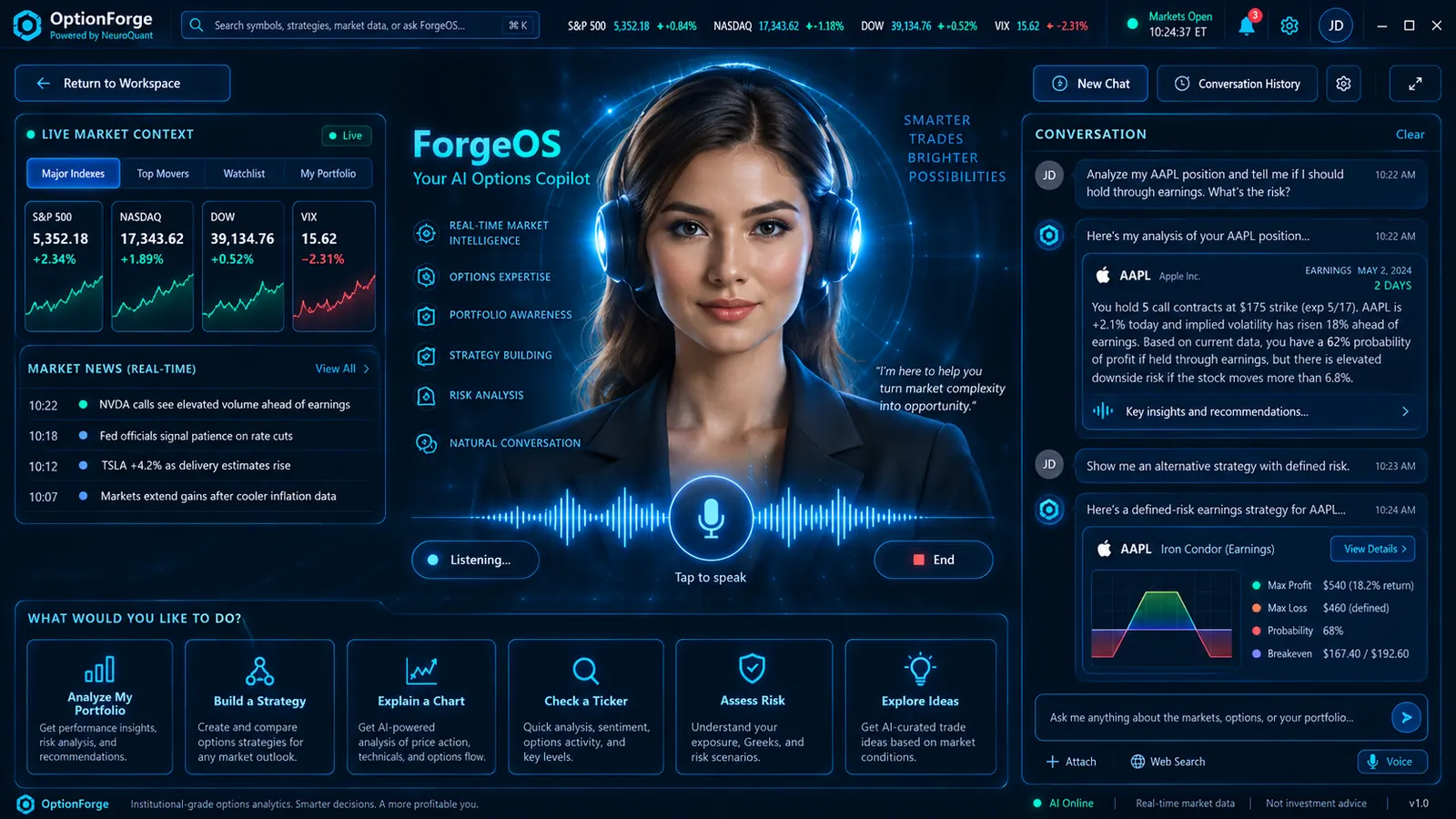
02 · ForgeOS conversational workspace
Future interface concept · Human-guided intelligence
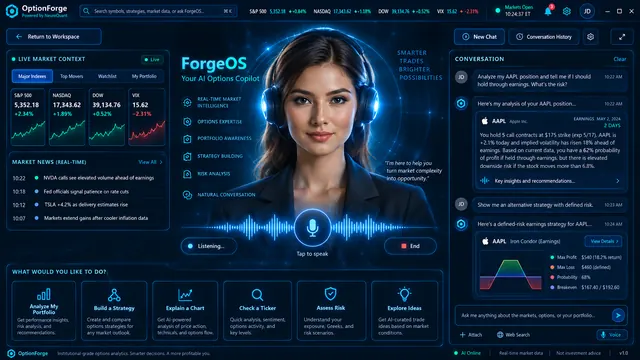
Explores an assistant-centered experience with visible data context, user-directed prompts, explainable summaries, and direct handoffs into analytical modules.
Look for: Look at how the assistant sits beside analytical context and exposes a place for user-directed prompts.
Design question: Could a reader distinguish an explanation, its data source, and a proposed next step?
Current Command Center guide
03 · AI-guided position review
Future interface concept · Contextual review
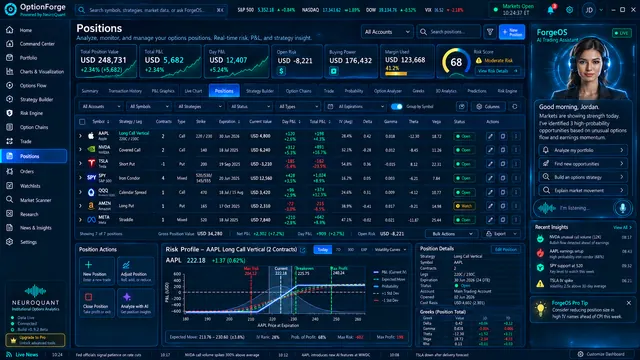
Explores how an assistant could surface position context, risk observations, and next analytical steps without replacing user judgment or broker authority.
Look for: Compare the position information with the adjacent assistant review and supporting analytics.
Design question: Would a suggested review remain understandable and optional before the user acts?
Current Position guide
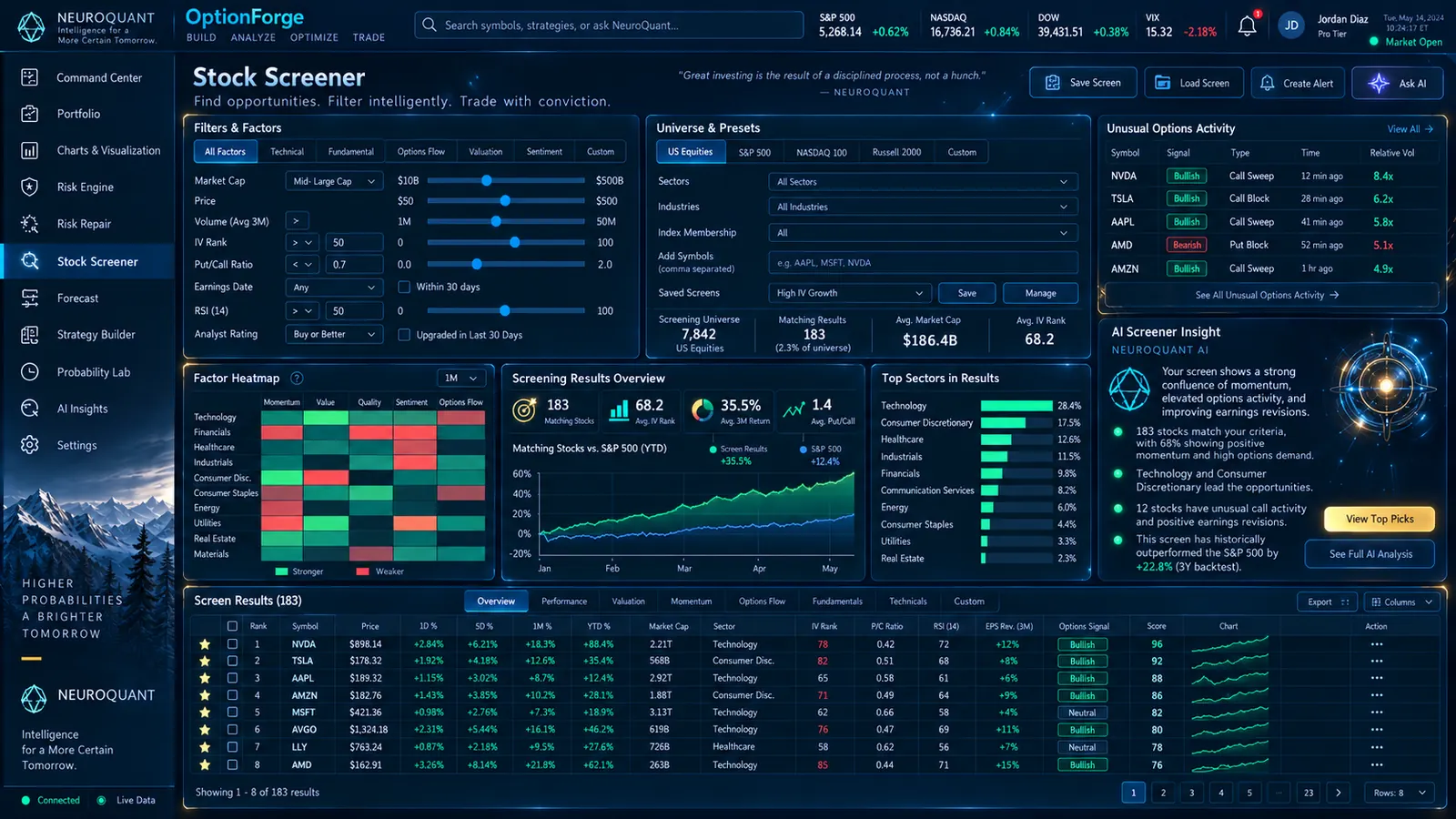
04 · Stock Screener
Future interface concept · Opportunity discovery
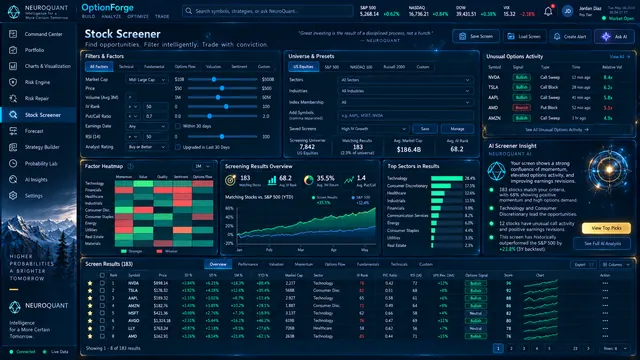
Explores a high-density discovery workspace with scoring, filters, heat maps, comparative metrics, watchlists, and rapid movement into deeper analysis.
Look for: Trace the path from filters and candidate rows to comparative metrics and a selected stock.
Design question: Could a user understand why a candidate appears and which filters are still active?
Current Stock Screener guide
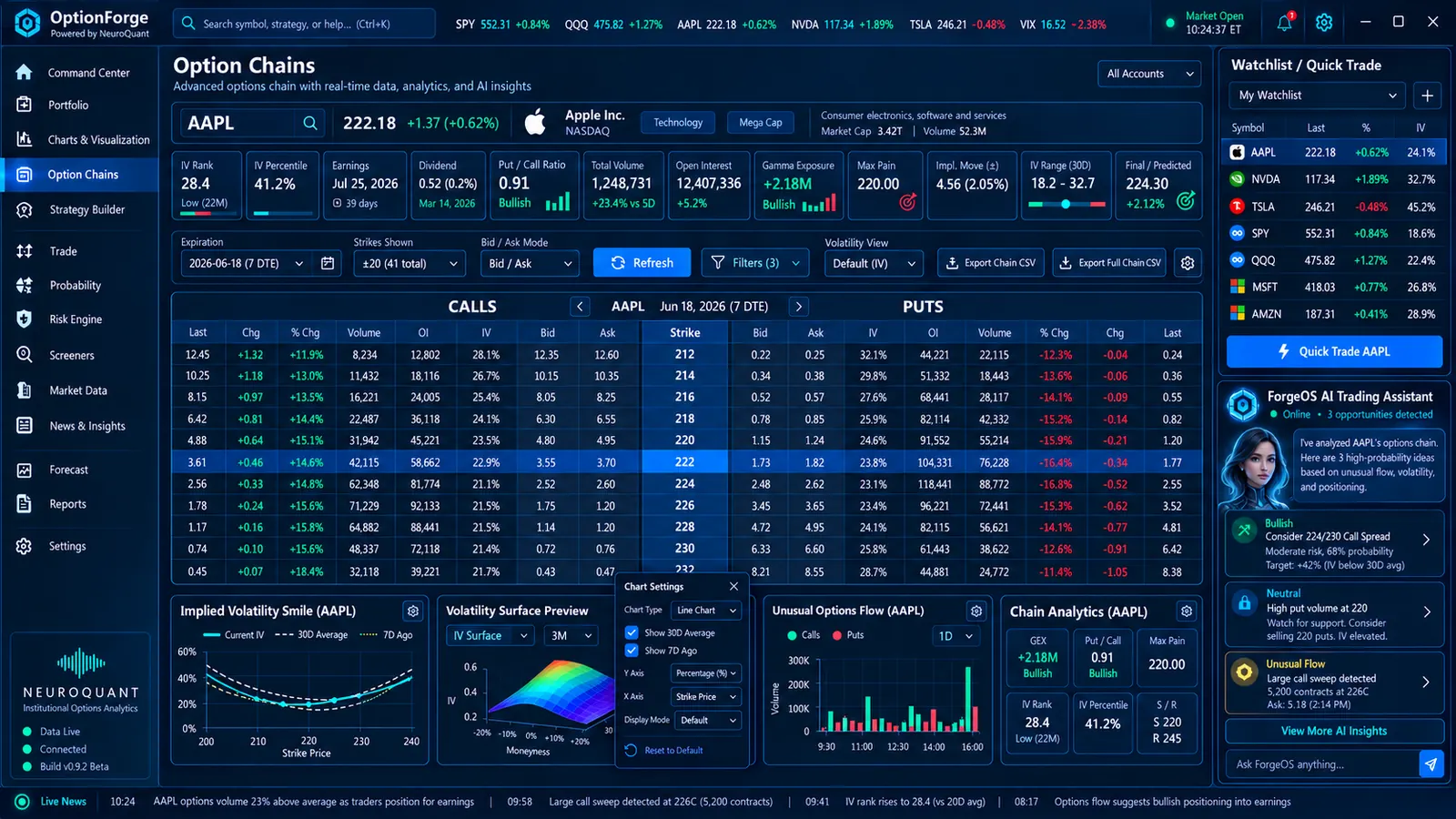
05 · Option Chains
Future interface concept · Contract intelligence
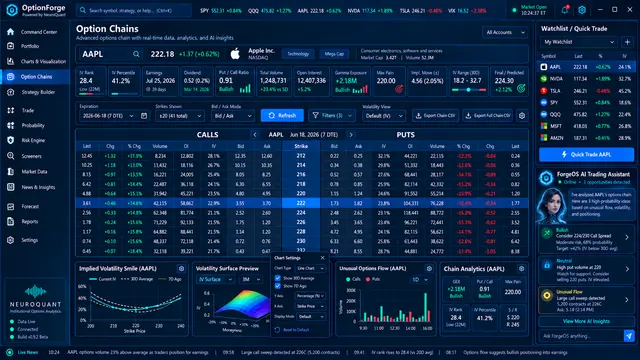
Explores a faster chain-reading surface where calls, puts, liquidity, volatility, Greeks, payoff context, and assistant notes remain visible together.
Look for: Compare the call and put tables with the selected expiry, pricing context, and supporting diagnostics.
Design question: Could a contract selection retain its symbol, expiry, liquidity context, and quote timestamp?
Current Option Chains guide
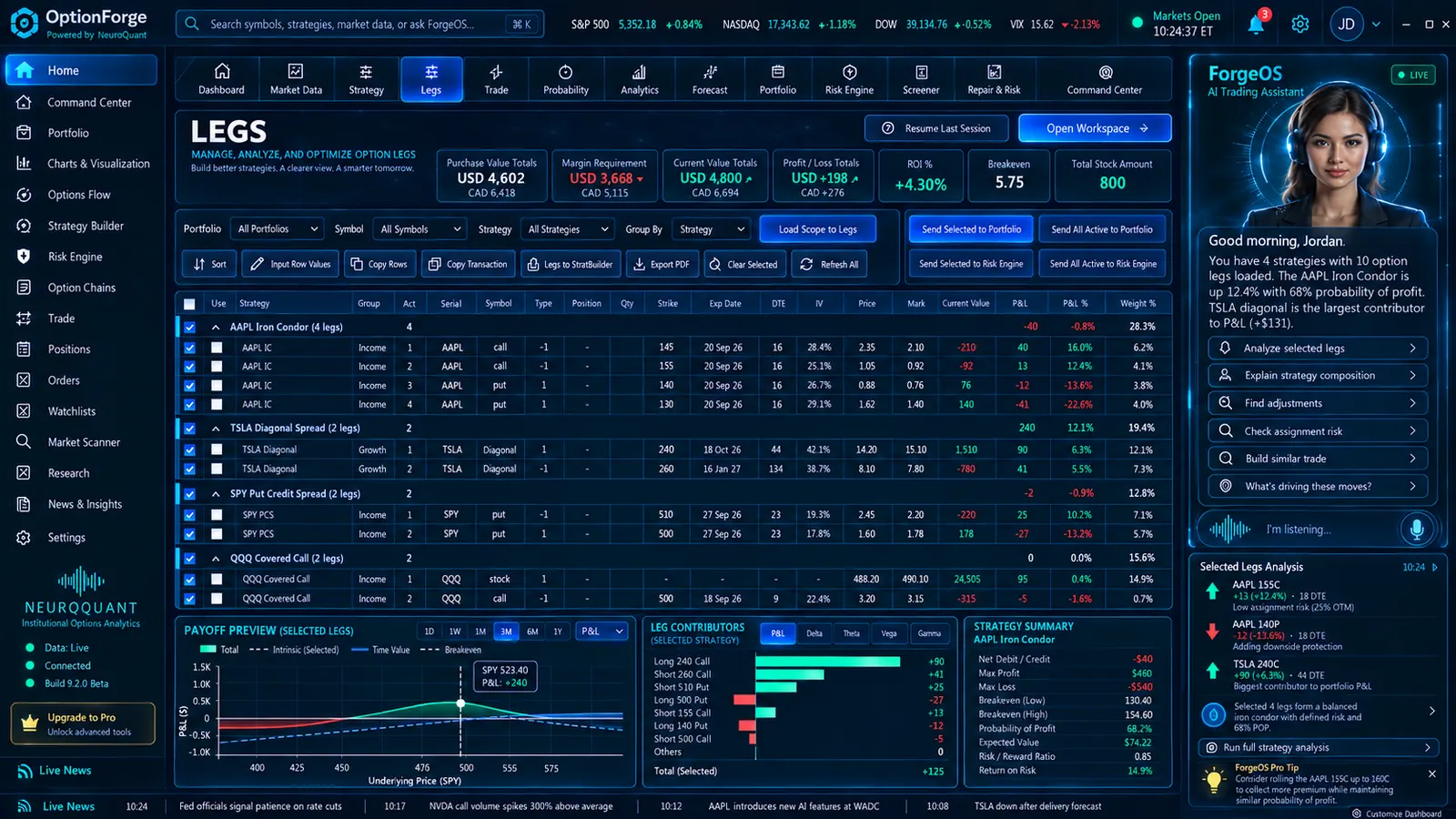
06 · Multi-leg trading workspace
Future interface concept · Structure preparation
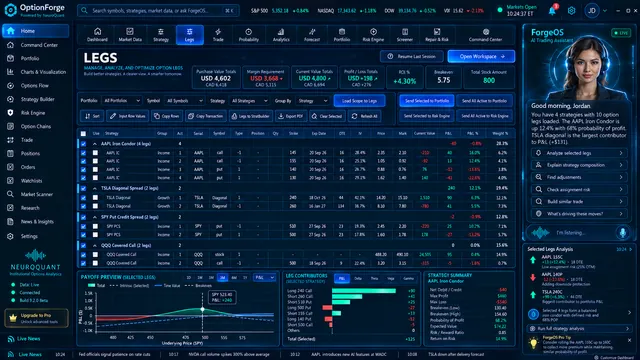
Explores a leg-centric workflow with contract selection, exposure summaries, payoff previews, scenario context, and clear user-authorized action boundaries.
Look for: Follow the selected contracts into the leg table and compare the surrounding payoff and exposure views.
Design question: Would each quantity, side, and contract remain explicit before transaction preparation?
Current Legs guide
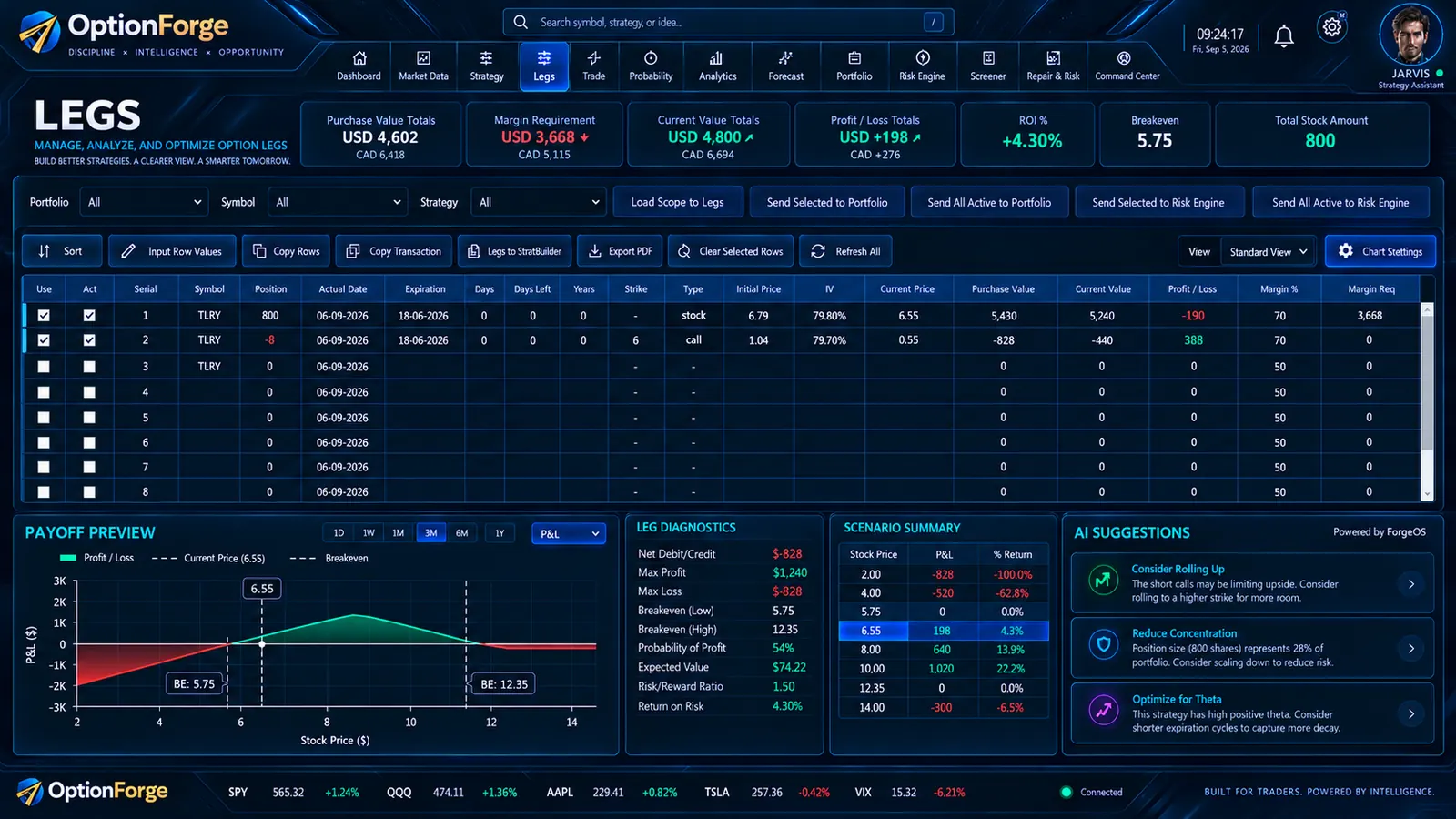
07 · Legs matrix
Future interface concept · Precision construction
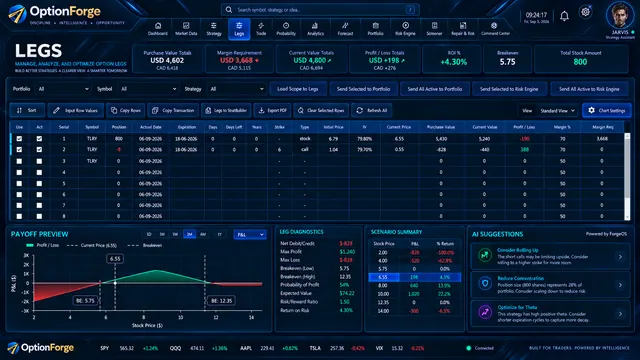
Explores an institutional-style matrix for editing many legs while keeping payoff, volatility, Greeks, probability, and strategy diagnostics immediately available.
Look for: Look at the editable leg matrix and the analytics arranged around the same structure.
Design question: Could one changed leg update dependent views while preserving the user’s place?
Current Legs guide
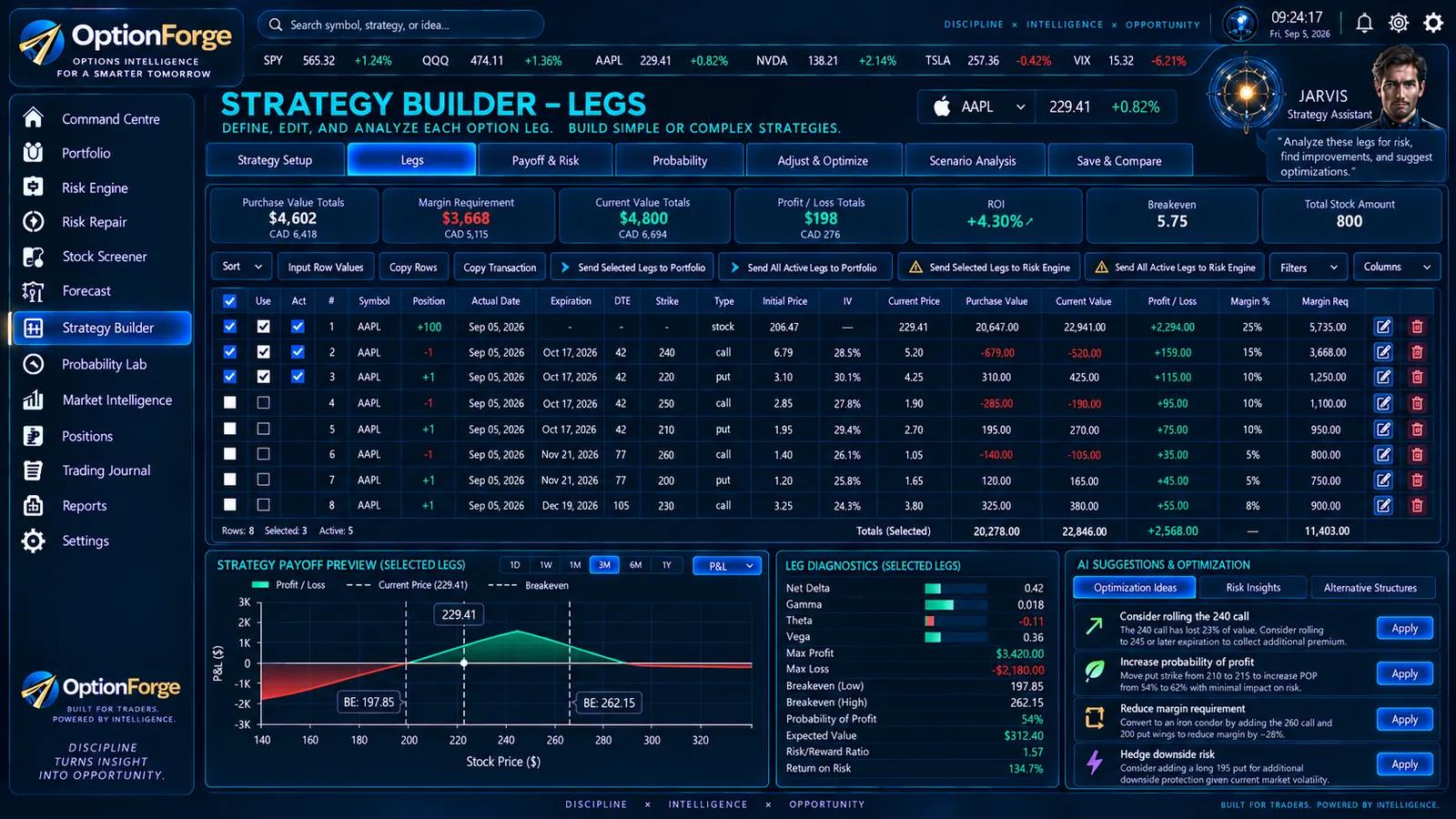
08 · Strategy Builder
Future interface concept · Template-to-structure workflow
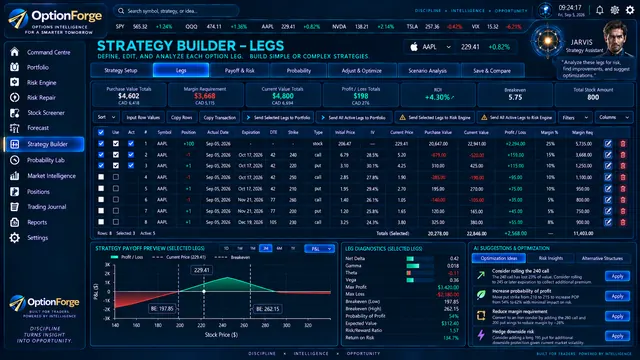
Explores a more cinematic builder that combines the strategy library, editable legs, payoff geometry, contract context, and guided analysis in one workspace.
Look for: Trace a strategy template into its leg structure and payoff view.
Design question: Would users see which values come from a template and which they have changed?
Current Strategy Builder guide
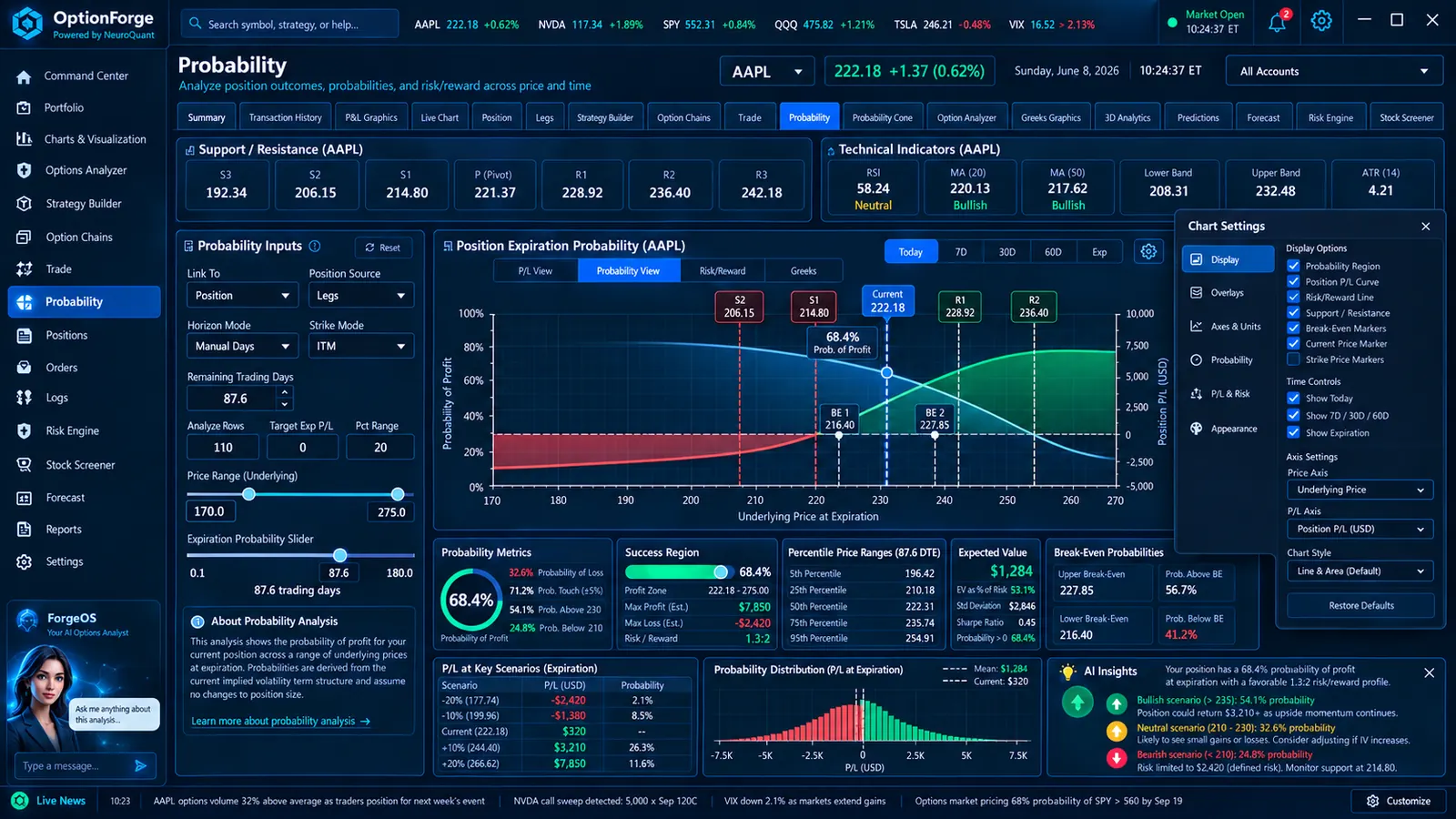
09 · Probability dashboard
Future interface concept · Distribution-aware analysis
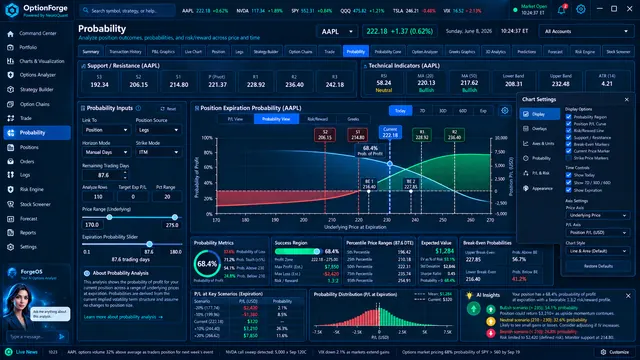
Explores how expected ranges, modeled probabilities, payoff zones, scenarios, and the assumptions behind them can be read without leaving the primary view.
Look for: Compare probability ranges, payoff regions, and the inputs that shape the modeled outcome.
Design question: Could a user distinguish model output from a prediction and locate the assumptions?
Current Probability guide
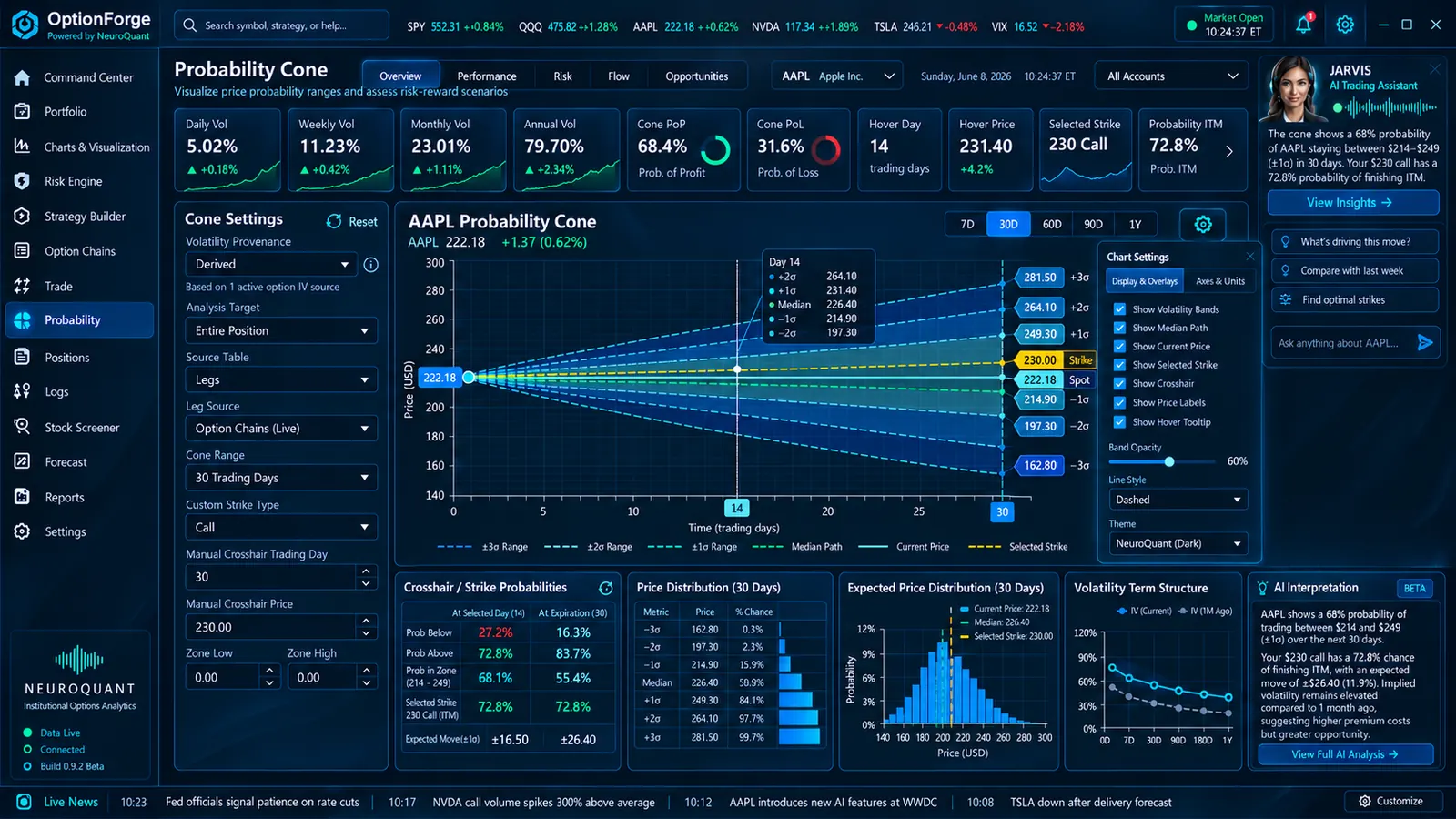
10 · Probability Cone
Future interface concept · Forward range modeling
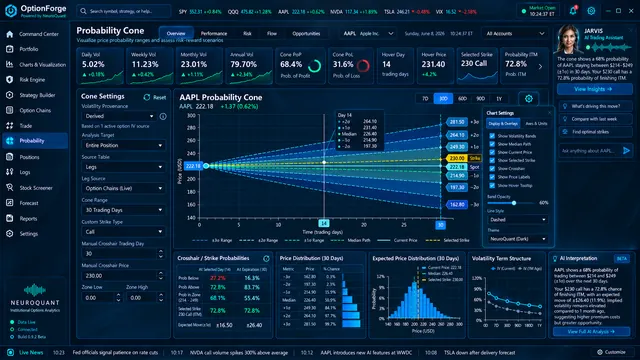
Explores a wide analytical canvas for volatility horizons, confidence bands, price paths, distributions, and related statistics under explicit user inputs.
Look for: Read the relationship between time horizons, widening bands, and the surrounding distribution views.
Design question: Would confidence bands keep their horizon, units, and modeling assumptions visible?
Current Probability Cone guide
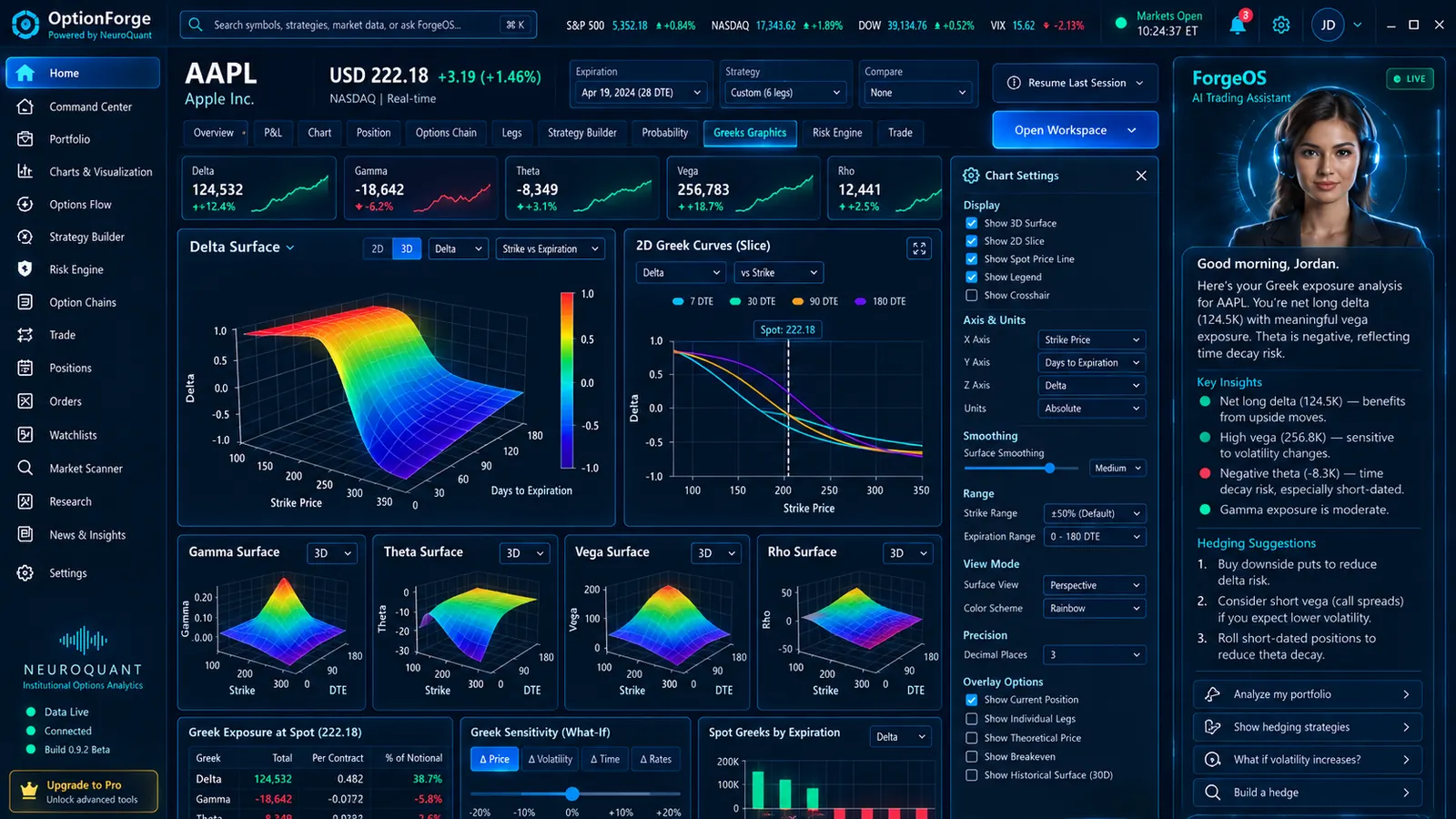
11 · Greeks analytics
Future interface concept · Sensitivity intelligence
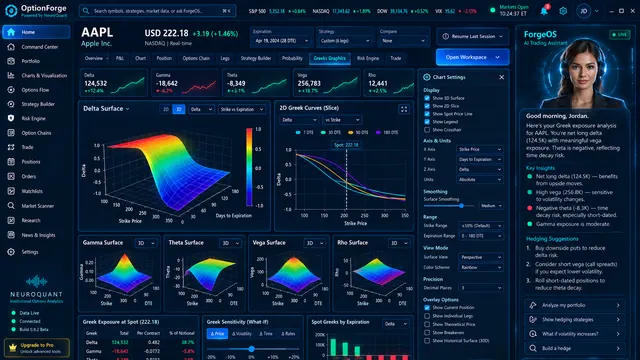
Explores a layered Greeks workspace with a principal 3D surface, supporting sensitivities, scenario controls, and contextual explanations in a single field.
Look for: Compare the main sensitivity surface with the surrounding controls and supporting metrics.
Design question: Could the same analytical result remain readable in a keyboard-accessible 2D or table view?
Current 3D Analytics guide
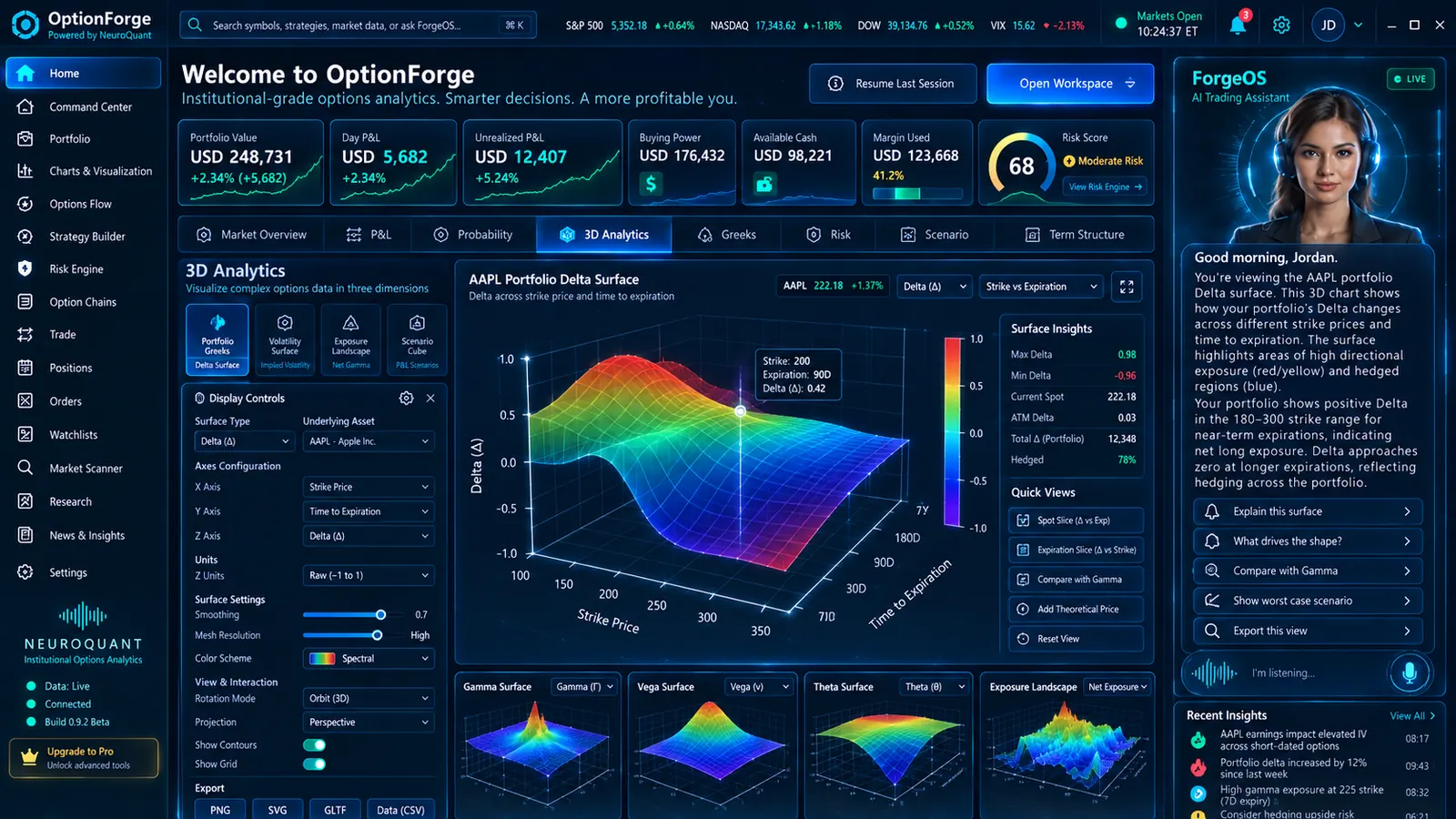
12 · 3D Delta analytics
Future interface concept · Multidimensional risk geometry
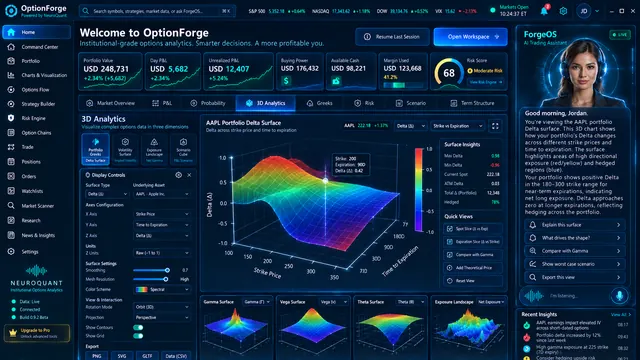
Explores an immersive surface-first layout for reading how delta and related sensitivities change across price, time, and volatility assumptions.
Look for: Look for how axes, surface shape, and scenario inputs communicate changing sensitivity.
Design question: Could a user identify each axis and reproduce the selected scenario without relying on color alone?
Current 3D Analytics guide
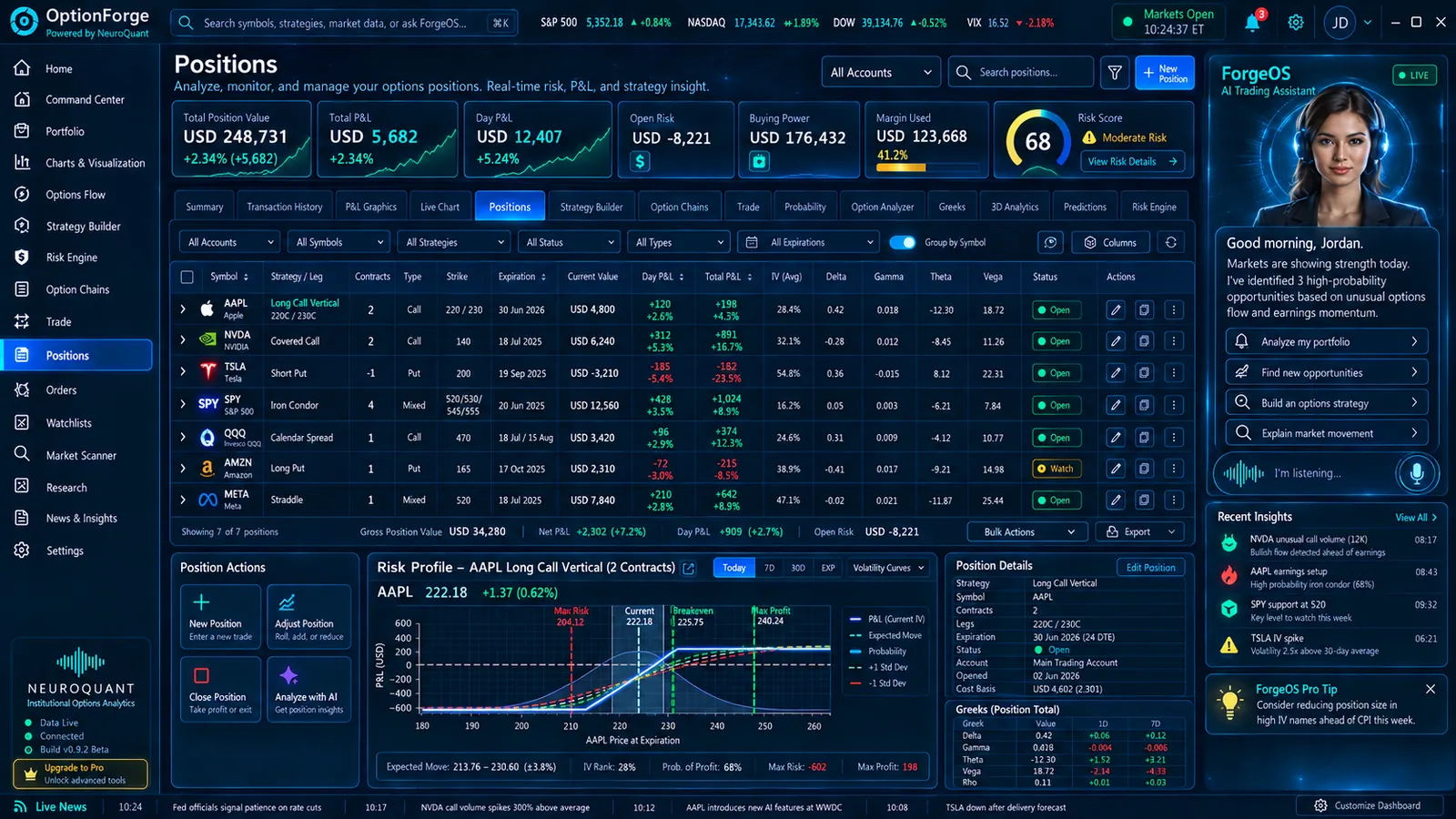
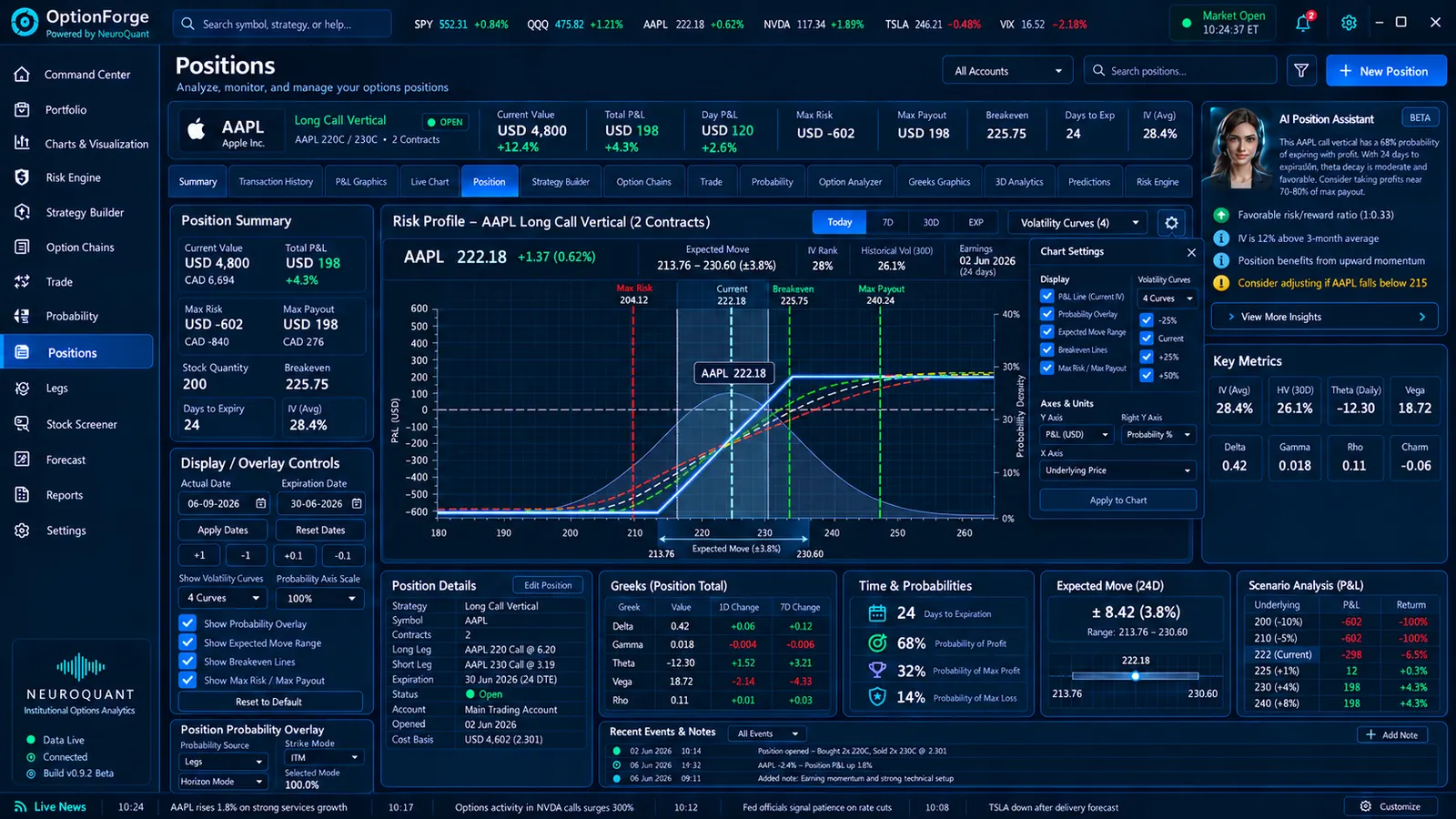
13 · Positions
Future interface concept · Position oversight
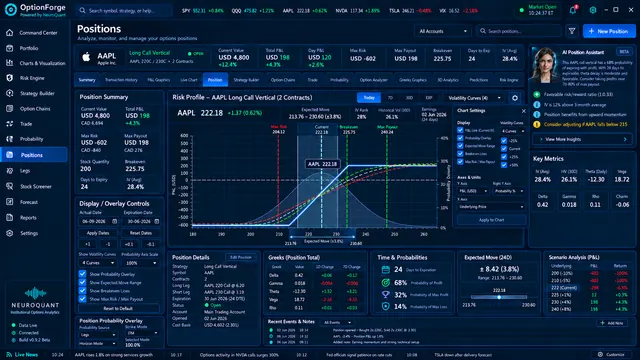
Explores a consolidated position workspace with current metrics, payoff geometry, probabilities, Greeks, events, and guided review paths.
Look for: Trace an individual position from the list into its payoff, Greeks, and review context.
Design question: Would position identity and data freshness remain visible when moving between analyses?
Current Position guide
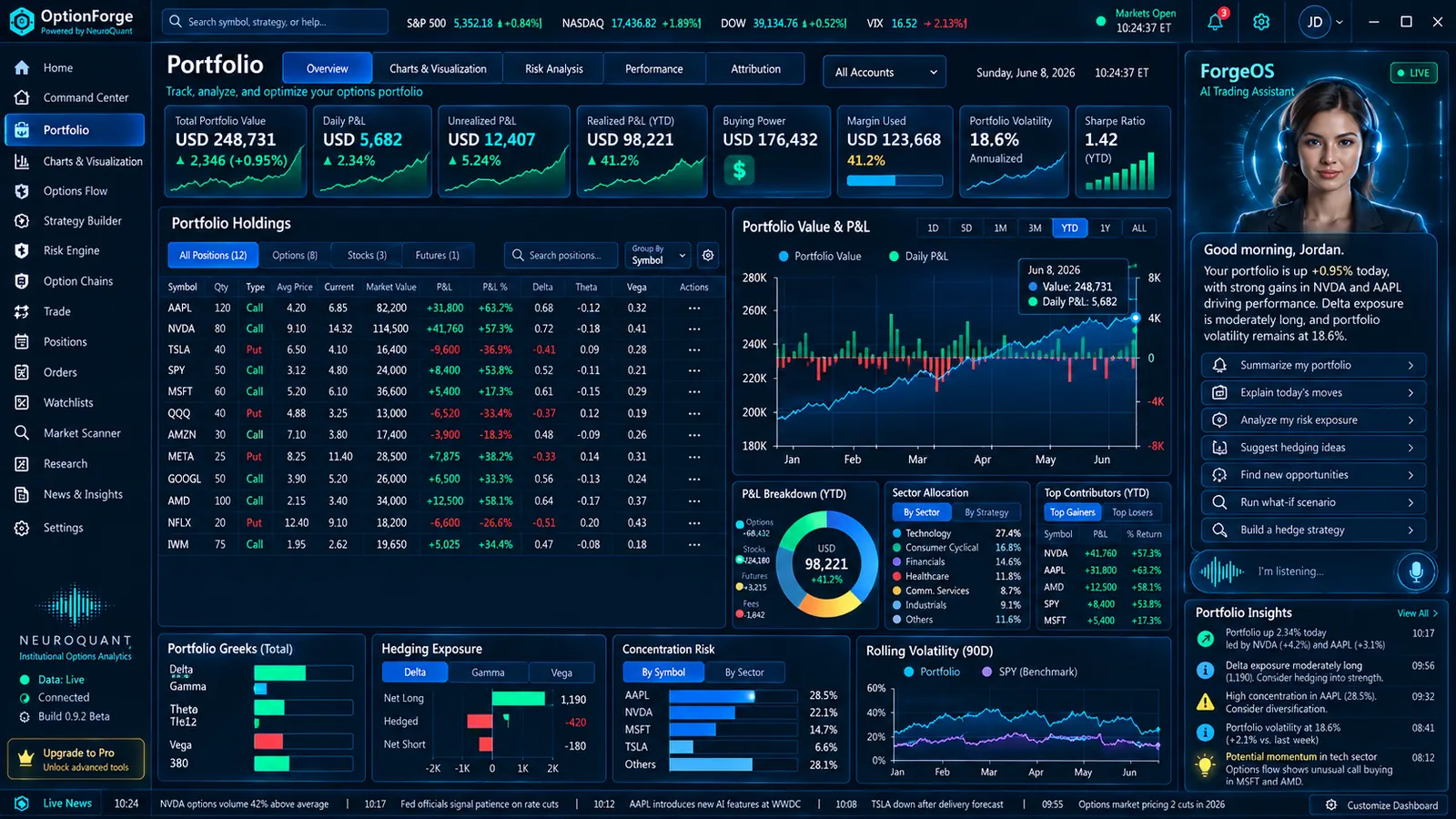
14 · Portfolio
Future interface concept · Book-level intelligence
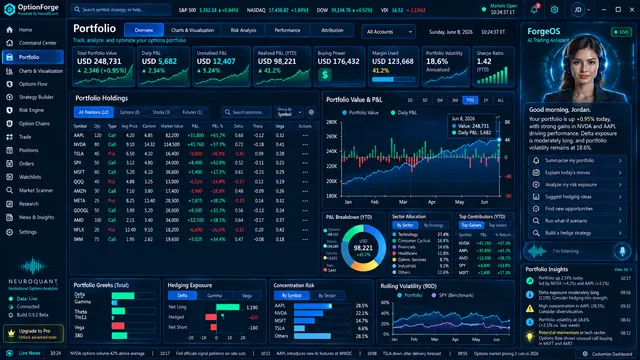
Explores a portfolio command surface for holdings, exposure, allocation, performance, risk posture, hedging context, and cross-position diagnostics.
Look for: Move from the portfolio overview to allocation, exposure, and individual holdings.
Design question: Could users connect an aggregate risk figure back to the positions that contribute to it?
Current Portfolio guide
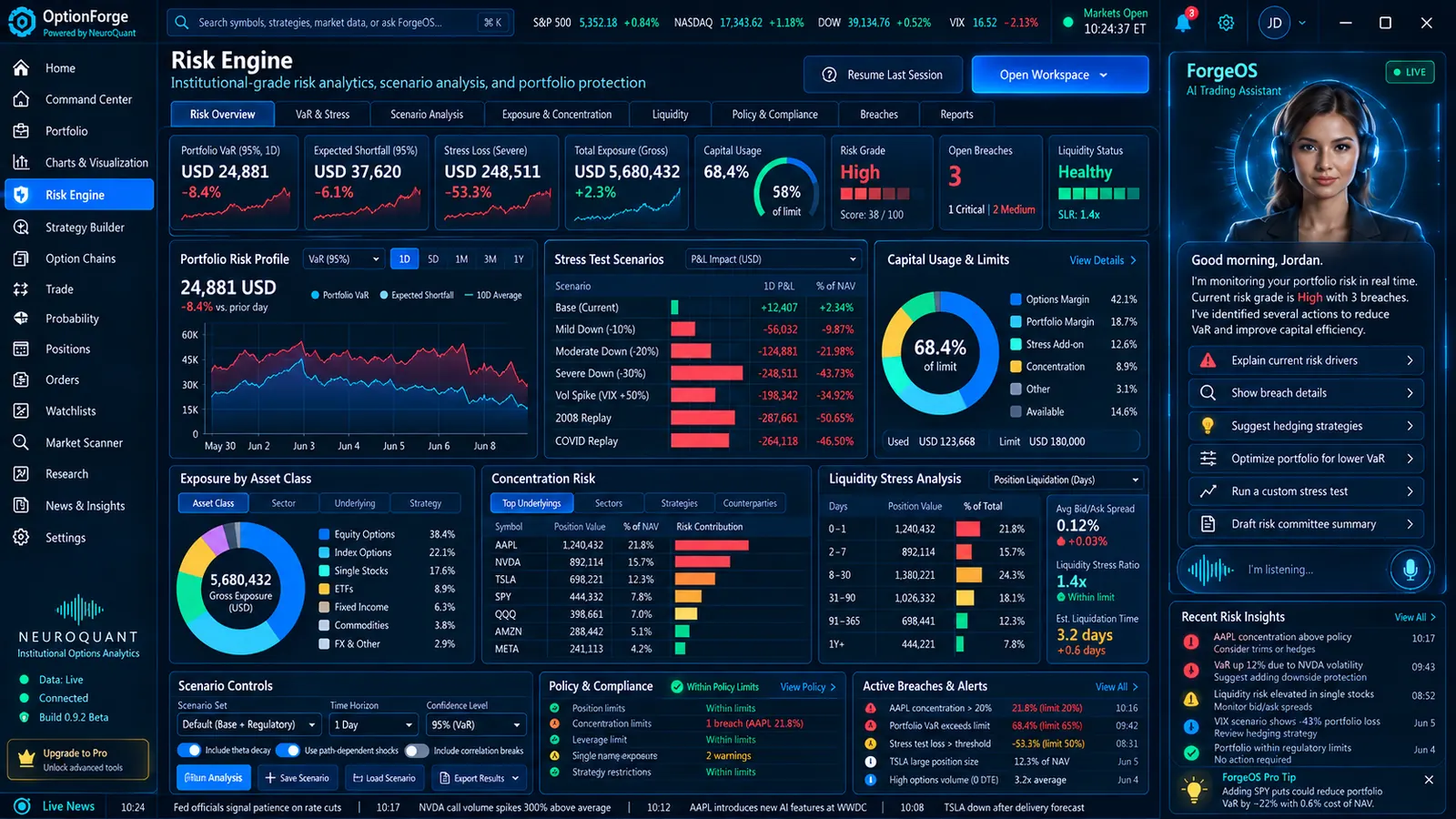
15 · Risk Engine
Future interface concept · Scenario and limit review
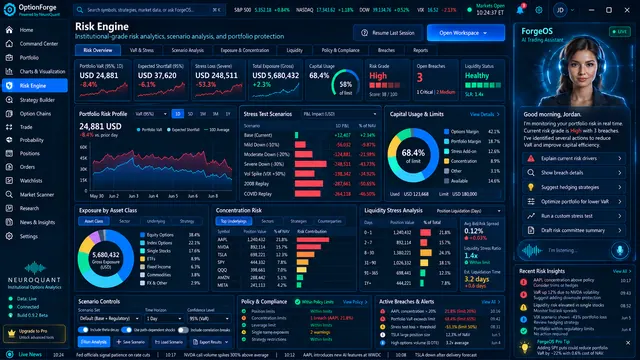
Explores a concentrated risk workspace for drawdown, scenario stress, concentration, limits, benchmark relationships, and potential hedge analysis.
Look for: Compare risk summaries, stress scenarios, and concentration views within the same workspace.
Design question: Would each risk measure expose its assumptions, units, and underlying portfolio snapshot?
Current Risk Engine guide
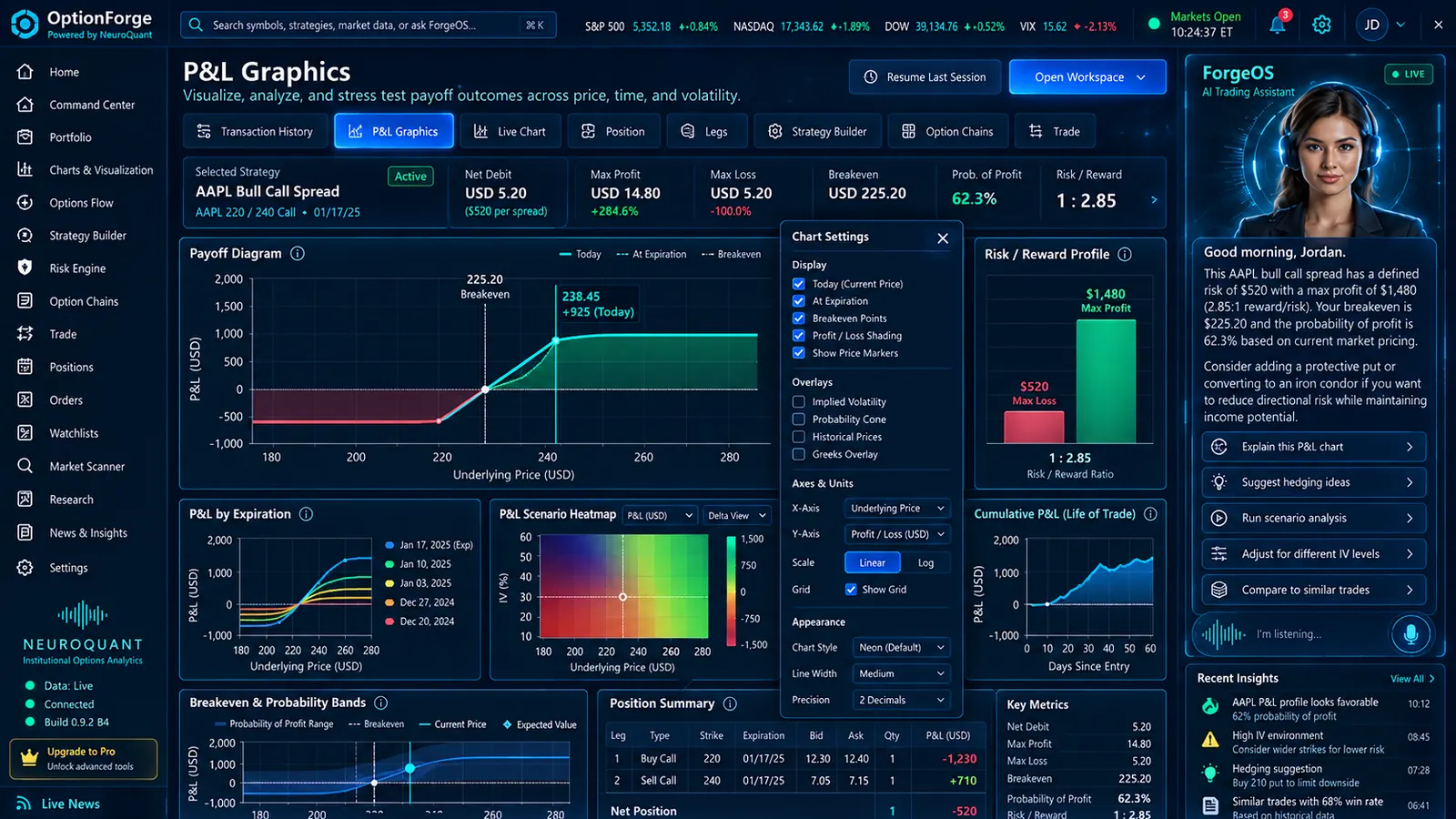
16 · P&L Graphics
Future interface concept · Outcome visualization
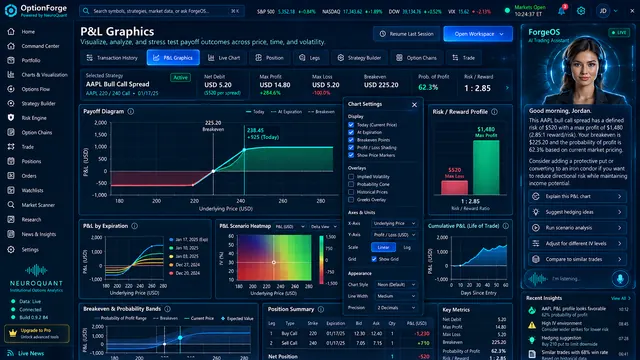
Explores an expanded payoff laboratory that keeps expiration and pre-expiration curves, probability overlays, Greeks, scenarios, and strategy details connected.
Look for: Compare payoff curves with the strategy details and scenario controls around the chart.
Design question: Could users distinguish expiration and pre-expiration results and understand what changed?
Current P&L Graphics guide